
Why Your Mower Deck is Scalping and How to Fix It
4/20/2026
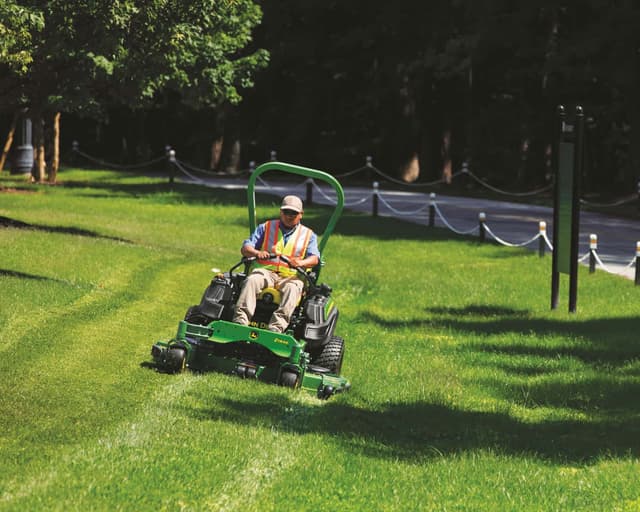
If you're seeing bare, brown patches or uneven cut lines after every mow, your deck is scalping — and it's one of the more frustrating mid-season problems a Texas property owner can deal with. The good news is that scalping is almost always fixable, and in most cases the cause is something you can diagnose and address yourself without a service call. Here's how to work through it.
Scalping happens when your mower deck makes direct contact with the ground — or cuts so close that it removes the growing point of the grass. The result is brown, patchy turf that's stressed, more vulnerable to weeds, and slow to recover in the Texas summer heat. On a Gulf Coast property where Bermuda or St. Augustine is already under heat stress by June, scalping can set your lawn or pasture back significantly. Scalping also dulls your blade significantly faster and can cause damage to your mower’s undercarriage.
Most scalping problems trace back to one of a handful of causes:
Start simple. Check your cutting height setting. For most Gulf Coast grasses in summer, a height of 3.5–4.5 inches keeps the turf healthy and reduces scalping risk. Next, check your anti-scalp rollers for wear and make sure they're all present and in contact with the ground correctly. Then check your tire pressure on both rear tires and level your deck side-to-side per your operator's manual.
If the scalping is localized to specific areas of your property — low spots, bumps, or berms — the terrain itself may be the issue rather than your equipment. A box blade pass to smooth those problem areas will do more good than any deck adjustment.
Still seeing scalping after working through the above? Bring your machine by your local Shoppa's John Deere and our service team will take a look.
Recurring scalping in specific locations usually points to terrain issues — low spots, berms, or uneven ground that catches the corners of your deck as you pass over them. Smoothing those areas with a box blade is the most effective long-term fix.
Deck leveling procedures vary by model, but the process generally involves adjusting the lift link and leveling gauge wheels with the deck lowered to cutting height on flat ground. Refer to your operator's manual for model-specific instructions, or ask our service team at Shoppa's John Deere.
For Bermuda and St. Augustine grass (the most common Gulf Coast turf varieties) a cutting height of 3.5–4.5 inches during summer helps reduce heat stress, discourages weeds, and minimizes scalping risk. Cutting too short during peak heat does more harm than good.