Brush Hogging in Texas: Equipment, Techniques, and Best Practices for Gulf Coast Properties
3/5/2026
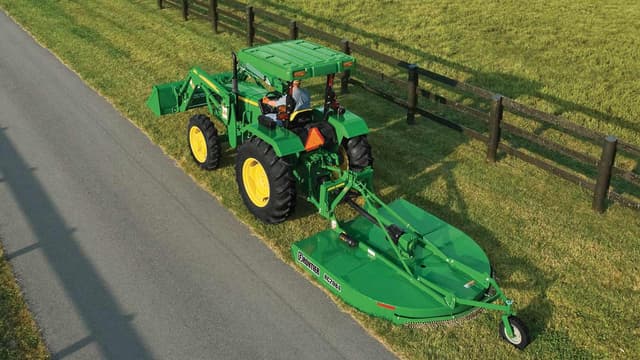
Owning a Texas Gulf Coast property isn’t easy work — you already know how fast vegetation can take over when not handled properly. Unique challenges like year-round warm temperatures, high humidity, and regular rainfall create the perfect conditions for thick growth brush, tall grasses, and invasive species. Brush hogging — mowing thick brush with a rotary cutter — is a staple of Gulf Coast property ownership. Here’s everything you need to know to get the job done right the first time.
Brush hogging is essentially heavy-duty mowing. You’ll be using a rotary cutter (sometimes called a bush hog) attached to the rear PTO of your tractor. But what’s the difference between a rotary cutter and something like a finish mower? A rotary cutter is designed to push through thick grass, weeds, brush, and even small saplings. They’re built for tough terrain and uneven vegetation that would destroy a standard mower.
Matching your rotary cutter to your tractor’s PTO horsepower is critical. Overloading your PTO can damage both the implement and the tractor. Here’s a quick guide:
If your property has heavy cedar, dense privet, or thick stands of invasive species, a compact tractor and standard rotary cutter may not be enough. In those cases, stepping up to a John Deere 5 Series utility tractor with a heavy-duty cutter — or adding a forestry mulcher attachment — may be the better long-term solution.
Need help choosing the right rotary cutter or tractor for your Gulf Coast property? Stop by your local Shoppa's John Deere and talk to one of our equipment experts.
Brush hogging is heavy-duty mowing with a rotary cutter, designed to cut through thick grass, brush, and saplings.
A bush hog and rotary cutter are the same thing — “bush hog” is simply a common nickname for the attachment. Both terms refer to the heavy-duty implement that connects to your tractor’s rear PTO for cutting thick vegetation.
The right tractor size depends on your vegetation and acreage. A John Deere 1 Series handles light brush on smaller properties, while a 4 Series powers heavy-duty cutters for thick brush and larger acreage. The John Deere 5 Series is a popular choice for commercial clearing.
Most Gulf Coast properties benefit from brush hogging every 4-8 weeks during the growing season to keep vegetation manageable.